
Tree diseases represent challenges that homeowners and property managers face throughout the growing season.
While many people hope to preserve every tree on their property, understanding when disease progresses beyond treatment helps protect both landscapes and safety.
In communities like Peoria, Illinois, where diverse tree species face various environmental stresses, recognizing the connection between disease and necessary removal becomes an important aspect of responsible property stewardship.
Understanding Common Tree Diseases in Illinois
Tree diseases affecting the Peoria area include fungal infections like anthracnose, which impacts ash, oak, sycamore, maple and birch trees, bacterial infections such as fireblight in ornamental pears, and serious conditions like Dutch elm disease spread by beetles and root grafts.
The Illinois climate creates conditions where certain pathogens thrive, particularly during periods of unusual weather patterns.
Dutch elm disease has killed millions of native elm trees since its introduction to Illinois in the 1950s, with American elm and red elm proving very susceptible to the two closely related fungi that cause this destructive wilt disease.
In the greater Peoria area, including Tazewell, Peoria and Woodford counties, common tree problems requiring attention include Emerald Ash Borer infestations.
Other significant diseases affecting trees in the region include:
- Oak Wilt: A fatal fungal disease particularly dangerous to red oak species
- Verticillium Wilt: A soil-borne infection affecting maples, ash, and redbuds
- Pine Wilt: A fungal disease transmitted by beetles that causes rapid decline in pine trees
- Root Rot: Various fungal pathogens that attack stressed trees, causing crown dieback and overall decline
How Disease Compromises Tree Structure
Diseases weaken trees from the inside out, creating conditions that eventually make removal necessary.
When a tree’s health deteriorates too far, with deep vertical cracks in the trunk, hollow sections, and many dead branches, the illness may affect more than half of its structure, compromising structural integrity and increasing the risk of falling.
The progression typically follows several patterns. Fungal infections may begin in the vascular system, blocking water and nutrient transport throughout the tree.
This leads to wilting, discoloration, and branch dieback. Root rot symptoms include mushrooming at the base, yellowing or stunted leaves, dieback of the crown and overall decline, with infection potentially spreading to multiple trees through root grafts.
Bacterial diseases often create similar symptoms but may progress differently.
Bacterial leaf scorch appears on various deciduous trees including oaks, maples, sweet gum, and mulberry, causing scorch symptoms in summer months and slow dieback over the course of ten years.
When Disease Makes Removal Necessary
There are certain diseases that can spread from one tree to another, meaning you not only risk infecting other trees on your property but also trees on a neighbor’s property.
This reality creates situations where removing one tree protects the broader landscape.
Several factors determine when removal becomes the appropriate response:
Disease Severity and Spread
If 30 percent or more of the crown shows symptoms of oak wilt, the tree is probably beyond treatment and will eventually need removal, though some trees can survive without treatment depending on whether it looks acceptable to keep.
Certain tree diseases have no cure, making removal the only option, and if treatment fails or the disease spreads, removal becomes necessary.
Safety Concerns
Removing diseased trees is important to prevent fall damage, as trees that die and begin to rot could lead to limbs falling, and large limbs that rot and fall could cause damage to homes, structures, or even people. In residential areas throughout Peoria and surrounding communities, trees near homes, driveways, and public spaces require careful monitoring.
As diseases weaken trees, they become more unstable, which can lead to broken limbs, uprooting, or even the entire tree falling, making tree removal crucial especially when the tree is in a high-traffic area or near buildings, cars, or utility lines.
Prevention of Disease Spread
Dutch Elm Disease is spread by elm bark beetles and can quickly decimate an elm population, requiring prompt removal of infected trees to prevent the spread to healthy neighbors. Similarly, oak wilt spreads swiftly among oak trees and can kill a tree within a single season.
In Peoria, where mature elm and oak trees contribute significantly to neighborhood character, managing these diseases requires community-wide awareness and action.
Many municipalities have strict ordinances requiring prompt removal and destruction of Dutch elm disease-infected elms, with disposal by burning, burying, chipping or debarking cut elm wood.
Signs That Indicate Removal May Be Needed
Recognizing warning signs helps property owners make informed decisions before emergencies develop:
- Significant canopy thinning or dieback affecting more than 30% of the crown
- Discolored, spotted, or prematurely dropping leaves outside normal seasonal patterns
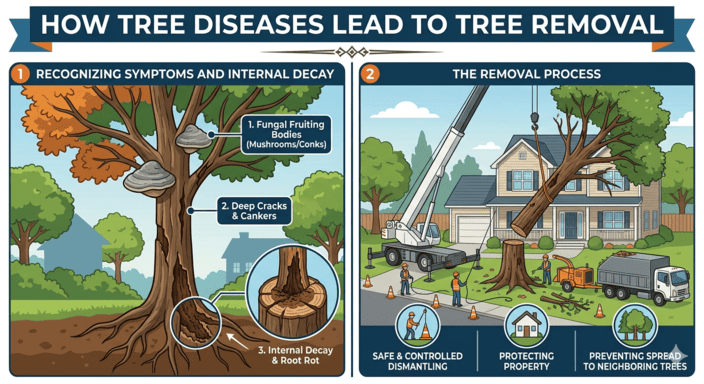
- Visible fungal growth, particularly mushrooms at the base or along the trunk
- Bark abnormalities including deep cracks, peeling, or areas that appear sunken
- Wilting or flagging in the upper crown during the growing season
- Substantial lean developing in previously upright trees
Signs of disease or decay include mushrooms growing on the trunk, deep bark cracks, or oozing wounds, which indicate serious problems that usually require removal or extensive corrective pruning.
The Decision-Making Process
Deciding whether to replace or treat a sick tree depends on the severity of the disease, the tree’s species, structural safety, and long-term cost-effectiveness, with consulting a certified arborist ensuring accurate diagnosis and cost-efficient action.
For Peoria-area property owners, several resources provide support in making these decisions.
The University of Illinois Extension system offers diagnostic services and educational materials specific to regional tree health issues.
Local certified arborists familiar with conditions in central Illinois can assess individual trees and provide recommendations based on current disease activity and tree condition.
Many trees are resilient and can recover from various stressors, including injuries, diseases, and severe weather conditions, making it worth trying to improve the tree’s health rather than removing it immediately, especially if it enhances property value and curb appeal when in good condition.
However, waiting too long creates additional risks and costs.
Waiting too long to remove a hazardous tree can result in costly damage and safety risks, with tree removal that could have been scheduled turning into tens of thousands in property damage and emergency repairs after storm damage.
Professional Assessment and Removal
The vast majority of tree removal is unsafe for the average person to attempt, as professional removal companies have certified arborists on staff with the equipment and expertise needed to safely remove trees, while most homeowners do not have the proper equipment or skill level for such work.
The professional removal process typically includes:
- Initial Assessment: A certified arborist evaluates the tree’s condition, identifies the disease, and determines whether treatment or removal is appropriate
- Safety Planning: Professionals assess surrounding structures, power lines, and other obstacles that affect the removal approach
- Systematic Removal: Using specialized equipment, arborists carefully dismantle the tree in sections or fell it safely
- Proper Disposal: Diseased wood requires specific handling to prevent pathogen spread, often through chipping, burning, or burial
After tree removal, remaining materials need proper disposal, with this step being particularly important for diseased trees since certain pathogens can remain viable on decaying wood.
Moving Forward After Removal
Removing a diseased tree creates opportunities for landscape improvement while protecting remaining healthy trees.
Replacing a tree gives the opportunity to plant a species that may be more resistant to local diseases or pests, enhancing the long-term sustainability of the landscape.
For property owners in Peoria and throughout central Illinois, selecting replacement trees suited to local conditions helps ensure future success. Considerations include:
- Species diversity to reduce vulnerability to disease outbreaks
- Native or adapted species that thrive in Illinois climate conditions
- Proper spacing from structures, utilities, and other trees
- Resistance to common regional diseases and pests
Maintaining a healthy forest also reduces liability and risk for citizens, with proper urban and community forest management leading to healthy trees, healthy communities, and healthy citizens.
Conclusion
The relationship between tree diseases and removal represents a balance between preservation efforts and practical necessity.
In Peoria and surrounding Illinois communities, understanding common diseases, recognizing warning signs, and working with qualified professionals helps property owners make decisions that protect both individual properties and the broader urban forest.
While no one wants to remove a mature tree, recognizing when disease has progressed beyond treatment protects people, property, and neighboring trees.
Professional assessment, timely action, and thoughtful replacement planning ensure that landscapes remain safe, healthy, and beautiful for years to come.